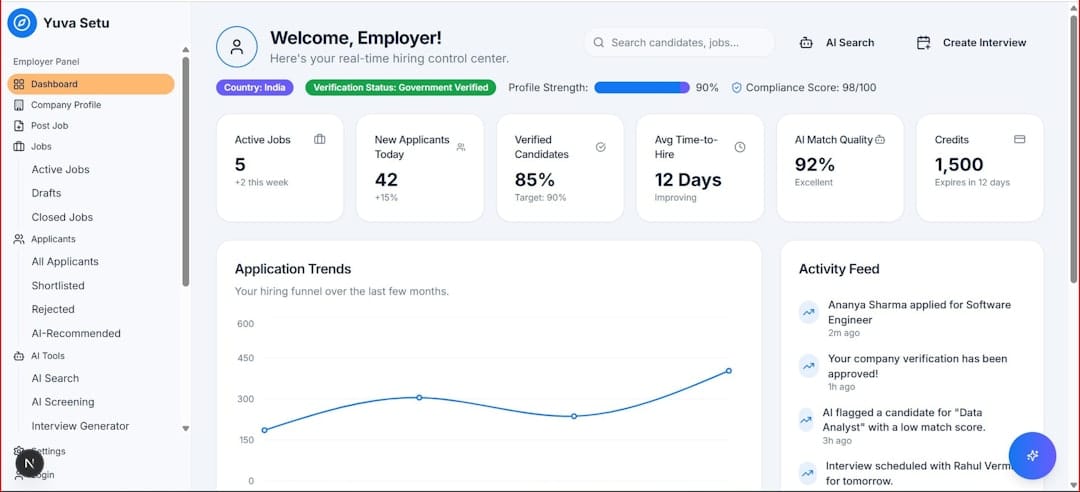
How to Use AI for Hiring and Recruitment in 2026
AI-powered recruitment is transforming how companies find, evaluate, and hire top talent. With 78% of recruiters now using AI tools to streamline their hiring process, learning how to leverage artificial intelligence for recruitment isn’t just an advantage—it’s becoming essential for staying competitive in today’s job market.
Whether you’re a small business owner struggling with manual screening or an HR professional looking to reduce time-to-hire, AI recruitment tools can help you make better hiring decisions faster and more cost-effectively.
Why AI-Powered Recruitment Matters in 2026
The modern hiring landscape has fundamentally changed. Traditional recruitment methods that worked five years ago are now inefficient and often biased.
Speed is critical in today’s competitive job market. Top candidates are off the market within 10 days, yet the average hiring process takes 36 days. AI tools can reduce this timeline by up to 70% by automating initial screening and candidate matching.
Bias reduction has become a legal and ethical imperative. AI algorithms, when properly configured, can help eliminate unconscious bias by focusing on skills and qualifications rather than demographic factors that might influence human recruiters.
Cost efficiency drives adoption across organizations of all sizes. Companies using AI recruitment tools report 40% lower cost-per-hire and 35% improvement in quality-of-hire metrics.
The talent shortage in key industries makes it crucial to identify and engage the best candidates quickly. AI recruitment platforms can analyze thousands of profiles in minutes, something that would take human recruiters weeks to accomplish.
Step-by-Step Guide to Implementing AI in Your Hiring Process
1. Define Your Hiring Requirements and Goals
Start by clearly outlining what you want AI to accomplish in your recruitment process.
Identify pain points in your current hiring workflow:
- Long time-to-hire cycles
- High volume of unqualified applicants
- Inconsistent candidate evaluation
- Poor candidate experience
- Limited talent pool reach
Set measurable objectives such as:
- Reduce screening time by 50%
- Improve candidate quality scores by 30%
- Increase diversity hiring by 25%
- Lower cost-per-hire by $2,000
2. Choose the Right AI Recruitment Tools
Select AI hiring platforms that align with your specific needs and budget.
For Resume Screening and Parsing:
- HireVue offers AI-powered resume screening starting at $35,000 annually
- Pymetrics provides bias-free candidate assessment from $15,000 per year
- Textio optimizes job descriptions for better candidate attraction at $20,000+ annually
For Candidate Sourcing:
- SeekOut delivers advanced candidate search capabilities from $12,000 per year
- Hiretual (now part of HireEZ) offers AI sourcing starting at $8,000 annually
- Eightfold AI provides comprehensive talent intelligence from $25,000+ per year
For Interview and Assessment:
- Kira offers video interview analysis starting at $5,000 per year
- HackerEarth provides technical assessment tools from $3,000 annually
- Codility delivers coding assessment platform starting at $4,000 per year
3. Integrate AI Tools with Your Existing Systems
Ensure compatibility with your current Applicant Tracking System (ATS). Most modern AI recruitment tools integrate with popular ATS platforms like:
Related reading: AI for competitive analysis
Related reading: AI data analysis tools
Related reading: automate your business processes
Related reading: AI to reduce costs
- Workday
- SuccessFactors
- BambooHR
- Greenhouse
- Lever
Set up data flows between systems to avoid manual data entry. Configure automatic sync of candidate information, assessment scores, and interview feedback.
Train your team on new workflows and interfaces. Plan for 2-4 weeks of adjustment period as recruiters adapt to AI-assisted processes.
4. Create AI-Optimized Job Descriptions
Use AI writing tools to craft job descriptions that attract quality candidates while reducing bias.
Key optimization strategies:
- Remove gendered language that might discourage diverse applicants
- Focus on essential skills rather than “nice-to-have” qualifications
- Use inclusive terminology that appeals to broader candidate pools
- Optimize for relevant keywords that candidates search for
Tools like Textio analyze your job descriptions and provide real-time suggestions to improve candidate response rates and diversity.
5. Implement Automated Candidate Screening
Configure AI screening parameters based on your role requirements.
Essential screening criteria:
- Required skills and certifications
- Minimum experience levels
- Education requirements (if truly necessary)
- Location and remote work preferences
- Salary expectations
Advanced AI screening can evaluate:
- Cultural fit indicators
- Career progression patterns
- Skills gap analysis
- Likelihood to accept offers
Set up automated ranking systems that score candidates based on weighted criteria. This ensures consistent evaluation while saving recruiters hours of manual review.
6. Use AI-Powered Candidate Sourcing
Expand your talent pipeline beyond traditional job boards using AI sourcing tools.
AI sourcing capabilities:
- Search across multiple platforms simultaneously
- Identify passive candidates who aren’t actively job hunting
- Analyze social media profiles for skill indicators
- Predict candidate interest and likelihood to respond
Best practices for AI sourcing:
- Use boolean search optimization
- Set up automated candidate alerts for new matches
- Personalize outreach messages using AI-generated insights
- Track response rates and optimize messaging
7. Deploy AI-Enhanced Interviewing
Video interview AI can analyze candidate responses, facial expressions, and speech patterns to provide additional insights.
AI interview analysis includes:
- Communication skills assessment
- Confidence and engagement levels
- Technical competency evaluation
- Cultural fit indicators
Popular AI interview platforms:
- HireVue offers comprehensive video interview analysis
- Kira specializes in academic and professional program interviews
- myInterview provides AI-powered interview insights starting at $2,500 annually
8. Make Data-Driven Hiring Decisions
Use AI analytics and reporting to make better hiring choices and continuously improve your process.
Key metrics to track:
- Time-to-hire by role and department
- Cost-per-hire reduction
- Quality-of-hire scores
- Candidate satisfaction ratings
- Diversity hiring improvements
- Offer acceptance rates
AI predictive analytics can forecast:
- Candidate success probability
- Employee retention likelihood
- Performance potential
- Team fit compatibility
Key Things to Look For When Choosing AI Recruitment Tools
Integration Capabilities
Ensure the AI hiring software integrates seamlessly with your existing tech stack. Look for tools that offer:
- Native ATS integrations
- API connectivity options
- Single sign-on (SSO) support
- Data export capabilities
Bias Mitigation Features
Choose platforms that actively work to reduce hiring bias:
- Algorithmic bias testing and monitoring
- Diverse training data sets
- Transparent scoring methodologies
- Regular bias audits and updates
Scalability and Pricing
Consider tools that can grow with your organization:
- Flexible pricing models based on usage or hiring volume
- Enterprise-grade security and compliance
- Multi-user access and permissions
- Customizable workflows
Customer Support and Training
Look for vendors that provide:
- Comprehensive onboarding programs
- Ongoing customer success management
- Regular product updates and improvements
- Industry-specific expertise
Frequently Asked Questions
How much does AI recruitment software cost?
AI recruitment tool pricing varies significantly based on features and company size. Basic tools start around $3,000-5,000 annually, while enterprise platforms range from $15,000-50,000+ per year. Most vendors offer tiered pricing based on number of users, job postings, or candidates processed.
Will AI replace human recruiters?
AI will not replace recruiters but will augment their capabilities. AI handles repetitive tasks like resume screening and initial candidate matching, allowing recruiters to focus on relationship building, strategic hiring decisions, and candidate experience. The most successful hiring teams combine AI efficiency with human judgment and emotional intelligence.
How do I ensure AI recruitment tools don’t introduce bias?
Choose bias-aware AI platforms that regularly audit their algorithms for discriminatory patterns. Implement diverse hiring teams to review AI recommendations, set clear evaluation criteria focused on job-relevant skills, and regularly analyze hiring outcomes for bias indicators. Many modern AI tools actually reduce bias compared to traditional hiring methods.
What’s the ROI of implementing AI in recruitment?
Companies typically see positive ROI within 6-12 months of implementing AI recruitment tools. Average benefits include 40% reduction in time-to-hire, 35% lower cost-per-hire, 50% improvement in candidate quality, and 25% increase in hiring manager satisfaction. Calculate your potential ROI based on current hiring volume and pain points.
Final Verdict
AI-powered recruitment is no longer optional for organizations serious about attracting top talent efficiently. The combination of speed, accuracy, and cost-effectiveness makes AI tools essential for modern hiring success.
Start with automated resume screening and AI-powered job description optimization as these provide immediate value with minimal implementation complexity. Gradually expand to more advanced features like predictive analytics and AI interviewing as your team becomes comfortable with the technology.
The key is choosing the right mix of tools for your specific needs and budget. Companies that embrace AI recruitment now will have a significant competitive advantage in the talent market over the next few years.